24/7 Rapid rEsponse
long beach + surrounding areas
Dehumidification Services in Long Beach, CA
Professional moisture and humidity control for Long Beach properties, removing excess moisture from the air to protect against mold, odor, and material damage.
IICRC CERTIFIED TECHNICIANS
FAMILY OWNED
24/7 EMERGENCY RESPONSE
DIRECT INSURANCE BILLING
Tell Us What Happend
Fill out our form and a real person from our Long Beach dispatch will call you back inside the hour. If your situation is active right now,
calling (562) 313-6900 directly is faster a certified crew can be on the way the same call. Either path gets you the same documented response.
ABOUT dehumidification services
Moisture and Humidity Control for Long Beach Properties
Excess humidity is a slow moving problem that damages a property from the inside out. In Long Beach, coastal air keeps indoor humidity high, and moisture builds in crawl spaces, closed rooms, and poorly ventilated areas even without a flood. Left unchecked, that trapped moisture leads to condensation, musty odor, warped materials, and mold. What's Next Emergency Response provides dehumidification services across Long Beach, pulling excess moisture from the air and bringing humidity back to a safe level. Dehumidification works alongside our Structural Drying sub-service and full Water Damage Restoration services. This page focuses on controlling air moisture and humidity.
Standing Water Waits for Nothing.
Standing Water Waits for Nothing.
what's included
What Our Long Beach Dehumidification Covers
Controlling humidity takes the right equipment sized to the space. Here is what our Long Beach crews provide.
Industrial Dehumidifiers
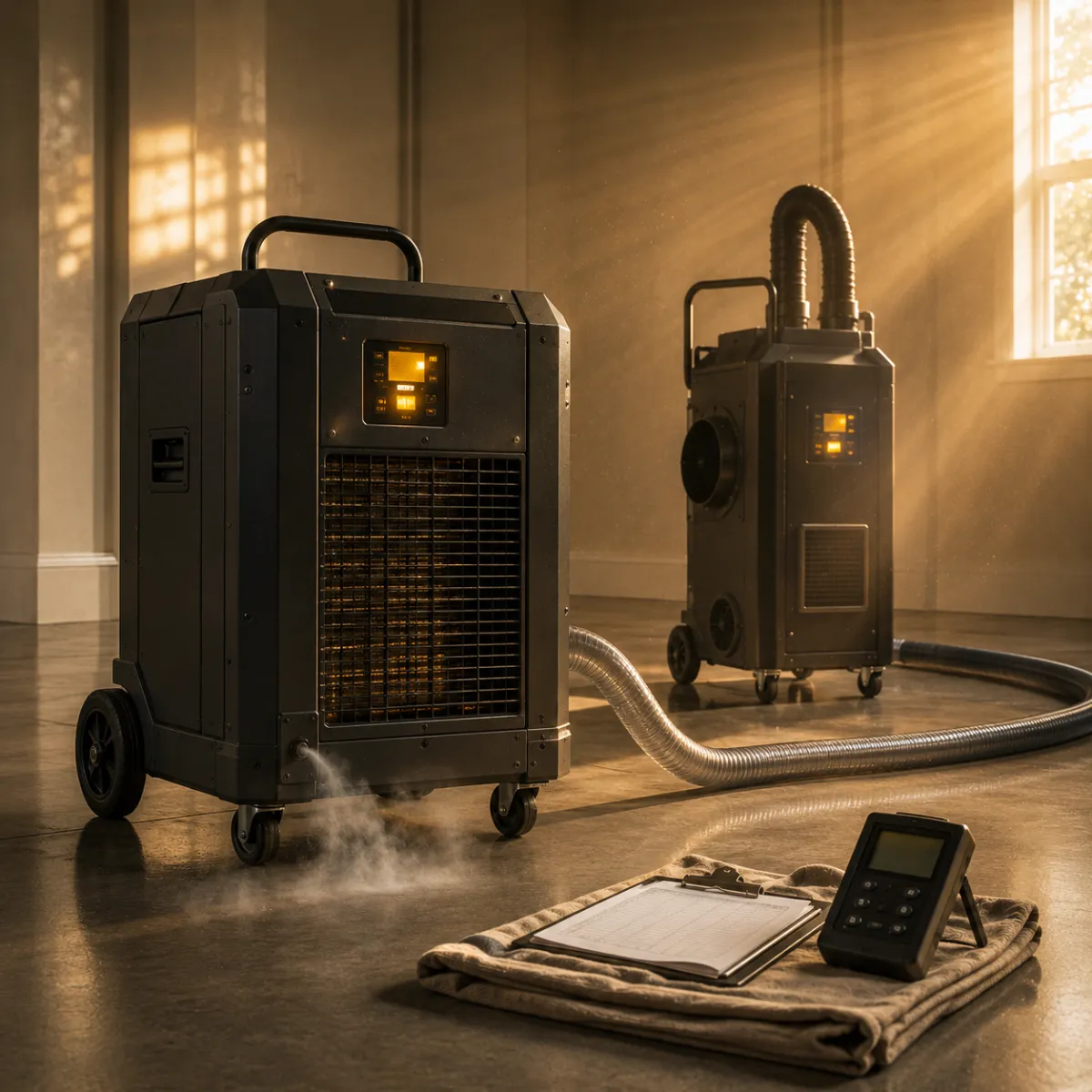
We deploy commercial dehumidifiers that remove far more moisture from the air than household units, sized to the space they need to protect.
Humidity Assessment
We measure indoor humidity and moisture levels to identify where the air is too damp and what is driving it.
Condensation and Moisture Source Control
We find the source of the excess moisture, whether coastal humidity, poor ventilation, or a hidden leak, and address it, not just the symptom.
Crawl Space and Enclosed Area Drying
We target crawl spaces, closets, and closed rooms where moisture collects and air does not circulate.
Mold and Odor Prevention
We bring humidity down to a level where mold and musty odor cannot take hold.
Our Process
Our Long Beach Dehumidification Process

Humidity Assessment
We measure moisture in the air and materials to find where humidity is too high and what is causing it.

Source Identification
We determine whether the moisture comes from coastal humidity, ventilation problems, condensation, or a hidden water source.

Dehumidifier Placement
We position industrial dehumidifiers sized to the space to pull excess moisture from the air efficiently.

Monitoring and Verification
We track humidity levels until the space reaches a safe, stable range that protects against mold and material damage.
F.A.Q
Dehumidification FAQ
Here are answers to common questions about our restoration services.
Why is humidity so high in Long Beach homes?
Long Beach sits near the coast, so ocean air keeps outdoor and indoor humidity high year round. That moisture collects in crawl spaces, closets, and closed rooms, where our dehumidification services bring humidity back to a safe level before mold and odor develop.
What is the difference between dehumidification and structural drying?
Structural drying removes water from a building after a flood or leak. Dehumidification controls excess moisture in the air, whether from coastal humidity, condensation, or ventilation problems. In Long Beach, the two often work together, but dehumidification also solves humidity problems on its own.
What humidity level is safe indoors?
Indoor humidity between 30 and 50 percent is generally considered safe, since mold and dust mites thrive above that range. Our Long Beach crews measure your indoor humidity and use industrial dehumidifiers to bring it into a safe, stable range.
Can high humidity cause mold without a leak?
Yes. Mold grows anywhere moisture stays high, so ongoing humidity in a crawl space or closed room can feed mold with no leak at all. Our Long Beach dehumidification services lower that moisture before mold begins colonizing within 24 to 48 hours.
Do you dehumidify crawl spaces in Long Beach?
Yes. Crawl spaces trap moisture and stay damp because air does not circulate, which is a common problem in Long Beach. We place dehumidifiers sized to the space and monitor moisture until the area reaches a safe, stable humidity level.
How long does dehumidification take?
Dehumidification timelines depend on how damp the space is, the size of the area, and the moisture source. We monitor humidity readings and continue until the space reaches a safe range, rather than stopping at a fixed number of days.
Contact Us Now
Office Location
15725 Texaco Avenue, Paramount California 90723
Office Info
+1 562-313-6900
Family owned emergency restoration headquartered in Paramount, California. Our IICRC certified crews respond 24/7 across Long Beach and the surrounding South LA, South Bay, and North Orange County communities for water, fire, mold, and biohazard emergencies. Built on integrity, honor, and commitment since 2020


© 2026 What's Next Emergency Response - All Rights Reserved.