24/7 Rapid rEsponse
long beach + surrounding areas
Structural Dyring in Long Beach, CA
Professional drying and dehumidification for Long Beach properties after water damage, removing hidden moisture from walls, floors, and framing to a verified dry standard.
IICRC CERTIFIED TECHNICIANS
FAMILY OWNED
24/7 EMERGENCY RESPONSE
DIRECT INSURANCE BILLING
Tell Us What Happend
Fill out our form and a real person from our Long Beach dispatch will call you back inside the hour. If your situation is active right now,
calling (562) 313-6900 directly is faster a certified crew can be on the way the same call. Either path gets you the same documented response.
ABOUT structural drying
Complete Drying After Water Damage in Long Beach
Structural drying is the step that protects your property after the standing water is gone. Removing visible water is only the start, because moisture soaks into drywall, subfloor, framing, and insulation, where it feeds mold and weakens the structure if it is not dried out fully. In Long Beach, where humidity slows natural drying, professional equipment is what returns a property to a safe, verified dry standard. What's Next Emergency Response dries the structure with commercial grade equipment and confirms the results with moisture readings. Structural drying is a core phase of our full Water Damage Restoration service. This page focuses on the drying process itself.
Standing Water Waits for Nothing.
Standing Water Waits for Nothing.
what's included
What Our Long Beach Structural Drying Covers
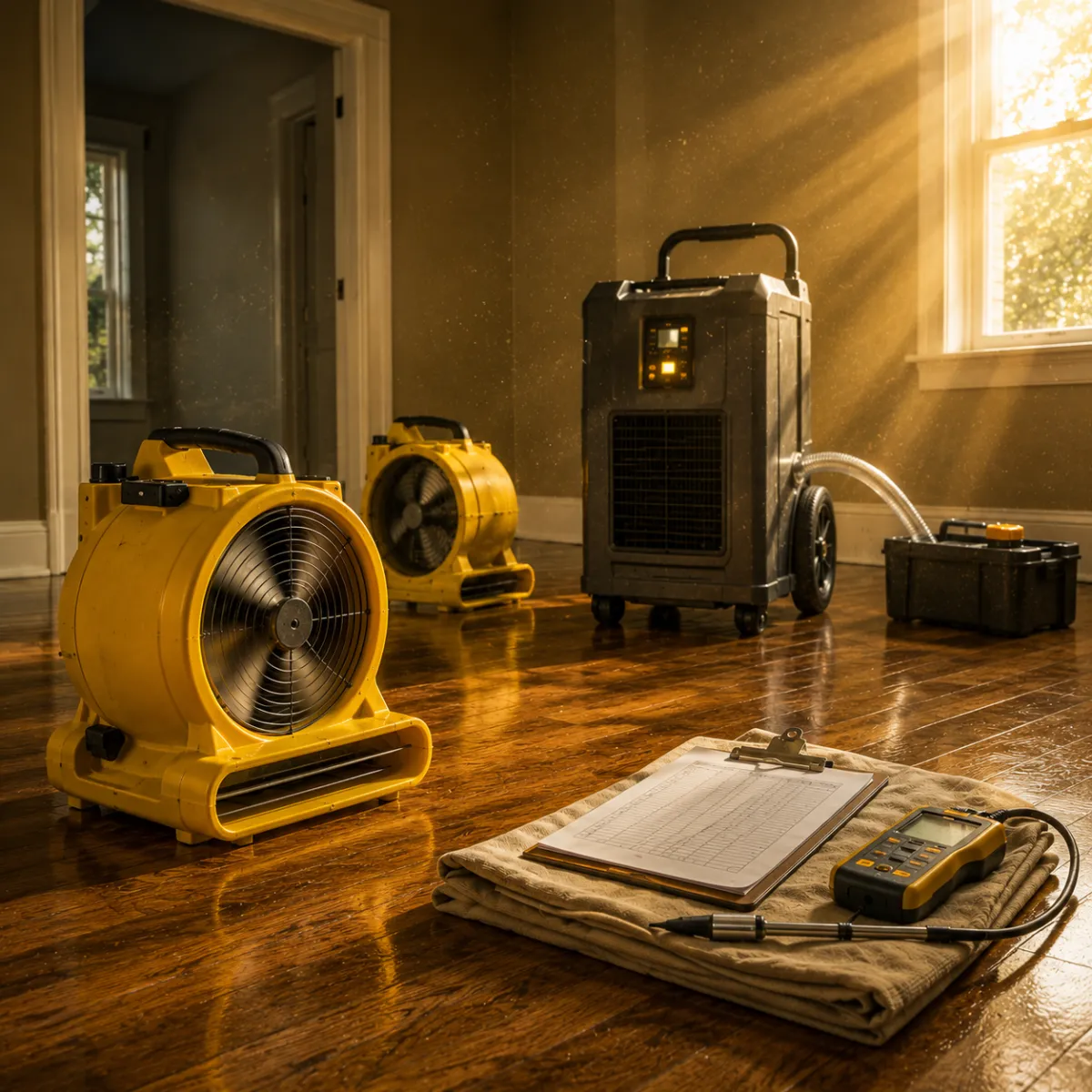
Drying a structure correctly is measured work, not guesswork. Here is what our Long Beach crews use and do.
Commercial Air Movers
We place high velocity air movers to push air across wet surfaces, speeding evaporation from floors, walls, and framing.
Industrial Dehumidifiers
We run dehumidifiers sized to the space to pull moisture out of the air, so the water leaving surfaces does not resettle elsewhere.
Moisture Monitoring
We measure moisture in materials and air with meters and track daily readings, so drying is confirmed by data, not by how a surface feels.
In Wall and Subfloor Drying
We use specialized drying methods to reach moisture trapped inside wall cavities and under flooring, where hidden water causes the most long term damage.
Verified Dry Standard
We continue drying until the structure reaches a documented dry standard under IICRC S500 guidelines.
Our Process
Our Long Beach Structural Drying Process

Moisture Mapping
We map moisture across the affected area with meters and thermal imaging, finding every wet pocket, including hidden ones

Equipment Placement
We position air movers and dehumidifiers based on the size and layout of the space for the fastest, most complete drying.

Daily Monitoring
We return to track moisture readings each day, adjusting equipment as the structure dries.

Verification and Documentation
We confirm the structure has reached a verified dry standard, then document the readings for your insurance claim.
F.A.Q
Structural Drying FAQ
Here are answers to common questions about our restoration services.
How long does structural drying take in Long Beach?
Structural drying usually takes 3 to 5 days, though the timeline depends on how much water was absorbed, the materials affected, and Long Beach humidity. We confirm the structure is dry with moisture readings before drying is considered complete.
Why do I need professional drying if the floor looks dry?
A surface can look and feel dry while moisture stays trapped in subfloor, wall cavities, and framing. That hidden moisture feeds mold within 24 to 48 hours, so our Long Beach crews measure moisture with meters rather than relying on how a surface looks.
What equipment is used for structural drying?
Structural drying uses commercial air movers to speed evaporation and industrial dehumidifiers to pull moisture from the air. Our Long Beach crews size the equipment to the space and monitor moisture readings daily until the structure reaches a verified dry standard.
Can wet drywall and framing be dried instead of replaced?
Often yes, if drying begins fast. When our Long Beach crews reach the moisture early, air movers and in wall drying can save drywall and framing. If materials stayed wet too long or were contaminated, replacement is safer.
How do you know when a structure is fully dry?
We measure moisture in materials and air with meters and compare them to a dry standard under IICRC S500 guidelines. Drying is complete only when the readings confirm it, not when a surface feels dry to the touch.
Does insurance cover structural drying in Long Beach?
Structural drying is covered under most standard homeowners policies when it follows a sudden covered loss like a burst pipe, and we bill every major carrier directly. Our documented moisture readings are exactly what adjusters need to approve the work.
Contact Us Now
Office Location
15725 Texaco Avenue, Paramount California 90723
Office Info
+1 562-313-6900
Family owned emergency restoration headquartered in Paramount, California. Our IICRC certified crews respond 24/7 across Long Beach and the surrounding South LA, South Bay, and North Orange County communities for water, fire, mold, and biohazard emergencies. Built on integrity, honor, and commitment since 2020


© 2026 What's Next Emergency Response - All Rights Reserved.