24/7 Rapid rEsponse
long beach + surrounding areas
Flood Damage Restoration in Long Beach, CA
Cleanup and restoration after storm flooding, rising water, and water main breaks across Long Beach, from water removal through drying and rebuild.
IICRC CERTIFIED TECHNICIANS
FAMILY OWNED
24/7 EMERGENCY RESPONSE
DIRECT INSURANCE BILLING
Tell Us What Happend
Fill out our form and a real person from our Long Beach dispatch will call you back inside the hour. If your situation is active right now,
calling (562) 313-6900 directly is faster a certified crew can be on the way the same call. Either path gets you the same documented response.
ABOUT flood damage restoration
Storm and Flood Cleanup for Long Beach Properties
Flood damage from storms and rising water is different from an indoor leak. When heavy rain overwhelms Long Beach streets, a water main breaks, or storm water pushes into a property, the water often arrives fast, spreads wide, and carries mud, debris, and contamination with it. Much of Long Beach sits on low, flood prone ground, so this is a real risk during storm season and during water main failures in neighborhoods like North Long Beach and Bixby Knolls. What's Next Emergency Response handles the full flood cleanup, from water removal to drying and rebuild. Flood damage restoration is part of our complete Water Damage Restoration service. This page focuses on storm and rising water flooding.
Standing Water Waits for Nothing.
Standing Water Waits for Nothing.
what's included
What Our Long Beach Flood Damage Restoration Covers
Flood water is often contaminated and widespread, so cleanup takes more than extraction. Here is what our Long Beach crews handle.
Flood Water Removal
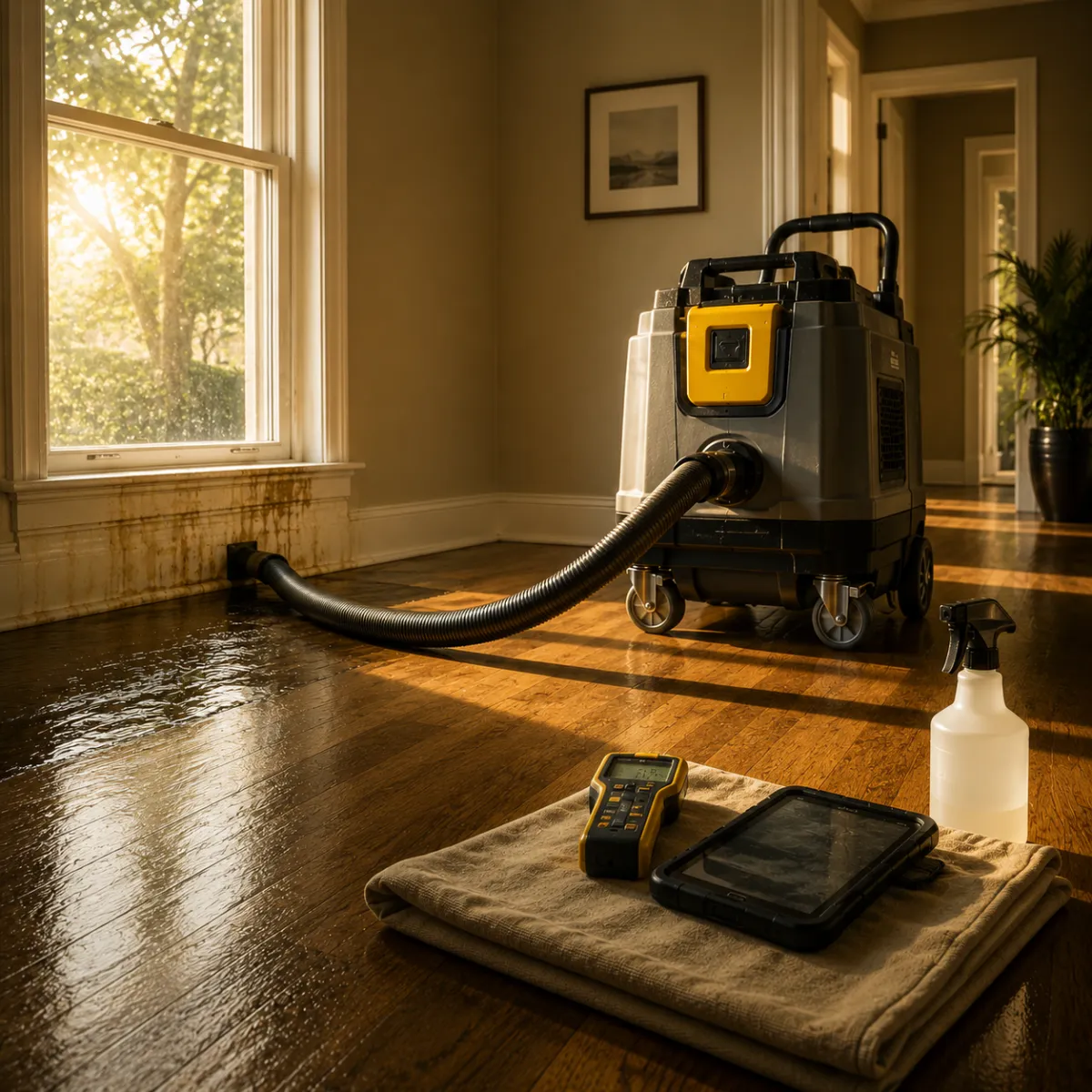
We pump and extract standing flood water fast with truck mounted extractors and submersible pumps, working from the lowest points where water collects.
Mud, Debris, and Contamination Removal
Storm and flood water carries mud, silt, and contaminants, so we remove debris and clean the affected area before drying begins.
Sanitizing and Decontamination
Flood water is treated as contaminated, so we disinfect surfaces and materials to protect your family or staff from bacteria.
Structural Drying
We dry the structure with commercial air movers and dehumidifiers, monitoring moisture until it reaches a verified dry standard.
Damage Assessment and Rebuild
We document the loss for your claim and rebuild the damaged structure under one contract.
Our Process
Our Long Beach Flood Damage Restoration Process

Emergency Response
A real person answers when you call, and we dispatch a crew to assess the flooding and begin water removal before more damage spreads.

Water and Debris Removal
We pump out flood water and remove the mud, silt, and debris storm water leaves behind.

Cleaning and Sanitizing
We treat flood water as contaminated, disinfecting surfaces and materials to make the space safe.

Drying and Restoration
We dry the structure to a verified standard, then rebuild what the flooding damaged.
F.A.Q
Flood Damage Restoration FAQ
Here are answers to common questions about our restoration services.
Does homeowners insurance cover flood damage in Long Beach,CA?
Standard homeowners insurance does not cover damage from external rising water or storm flooding, which requires a separate flood policy through the National Flood Insurance Program. Sudden internal water damage like a burst pipe is covered. We document the cause either way for your claim.
What should I do after a flood in Long Beach, CA?
Stay out of flood water, which can carry contamination and hide electrical hazards, and do not use electrical devices in flooded areas. Move to a safe, dry area and call for professional cleanup. Our Long Beach crews handle contaminated flood water safely.
Is storm flood water contaminated?
Yes. Storm and rising flood water is treated as contaminated because it carries mud, sewage, bacteria, and debris. Our Long Beach crews remove it with proper safety handling, then disinfect the area rather than just drying it.
How fast should flood water be removed?
Flood water should be removed within hours, because it spreads through the structure and mold begins growing within 24 to 48 hours. Our Long Beach crews dispatch the moment you call to start pumping and extraction fast.
Do you handle flooding from water main breaks in Long Beach?
Yes. Water main breaks are a frequent flooding cause in Long Beach neighborhoods like North Long Beach and Bixby Knolls. We remove the water, clean the contamination, dry the structure, and rebuild, all under one contract.
How long does flood damage restoration take in Long Beach?
Flood damage restoration depends on how deep the water was, how far it spread, and how much rebuild is needed. Water removal and drying often take several days, while reconstruction takes longer. We give you a clear timeline after assessing the property.
Contact Us Now
Office Location
15725 Texaco Avenue, Paramount California 90723
Office Info
+1 562-313-6900
Family owned emergency restoration headquartered in Paramount, California. Our IICRC certified crews respond 24/7 across Long Beach and the surrounding South LA, South Bay, and North Orange County communities for water, fire, mold, and biohazard emergencies. Built on integrity, honor, and commitment since 2020


© 2026 What's Next Emergency Response - All Rights Reserved.