24/7 Rapid rEsponse
long beach + surrounding areas
Mold Removal in Long Beach, CA
Safe removal of black mold from Long Beach homes and businesses, with full containment and IICRC S520 protocols to protect your health and stop it from spreading.
IICRC CERTIFIED TECHNICIANS
FAMILY OWNED
24/7 EMERGENCY RESPONSE
DIRECT INSURANCE BILLING
Tell Us What Happend
Fill out our form and a real person from our Long Beach dispatch will call you back inside the hour. If your situation is active right now,
calling (562) 313-6900 directly is faster a certified crew can be on the way the same call. Either path gets you the same documented response.
ABOUT mold removal
Safe Black Mold Removal for Long Beach Properties
Black mold needs to be handled carefully, not scrubbed away with bleach and a sponge. This type of mold, often found after water damage or in the damp, humid conditions common in Long Beach, releases spores that can spread through the air and pose health risks when disturbed the wrong way. What's Next Emergency Response removes black mold across Long Beach using full containment and the IICRC S520 elevated protocol, the industry standard for handling this type of mold safely. Black mold removal is a specialized part of our full Mold Remediation service. This page focuses on identifying and safely removing black mold.
Small Mold Grows Into Big Problems
Standing Water Waits for Nothing.
what's included
What Our Long Beach Black Mold Removal Covers
Removing black mold safely means controlling the spores at every step. Here is what our Long Beach crews do.
Inspection and Identification
We inspect the property, identify the affected areas, and locate the moisture source feeding the mold, since black mold always follows a water problem.
Full Containment
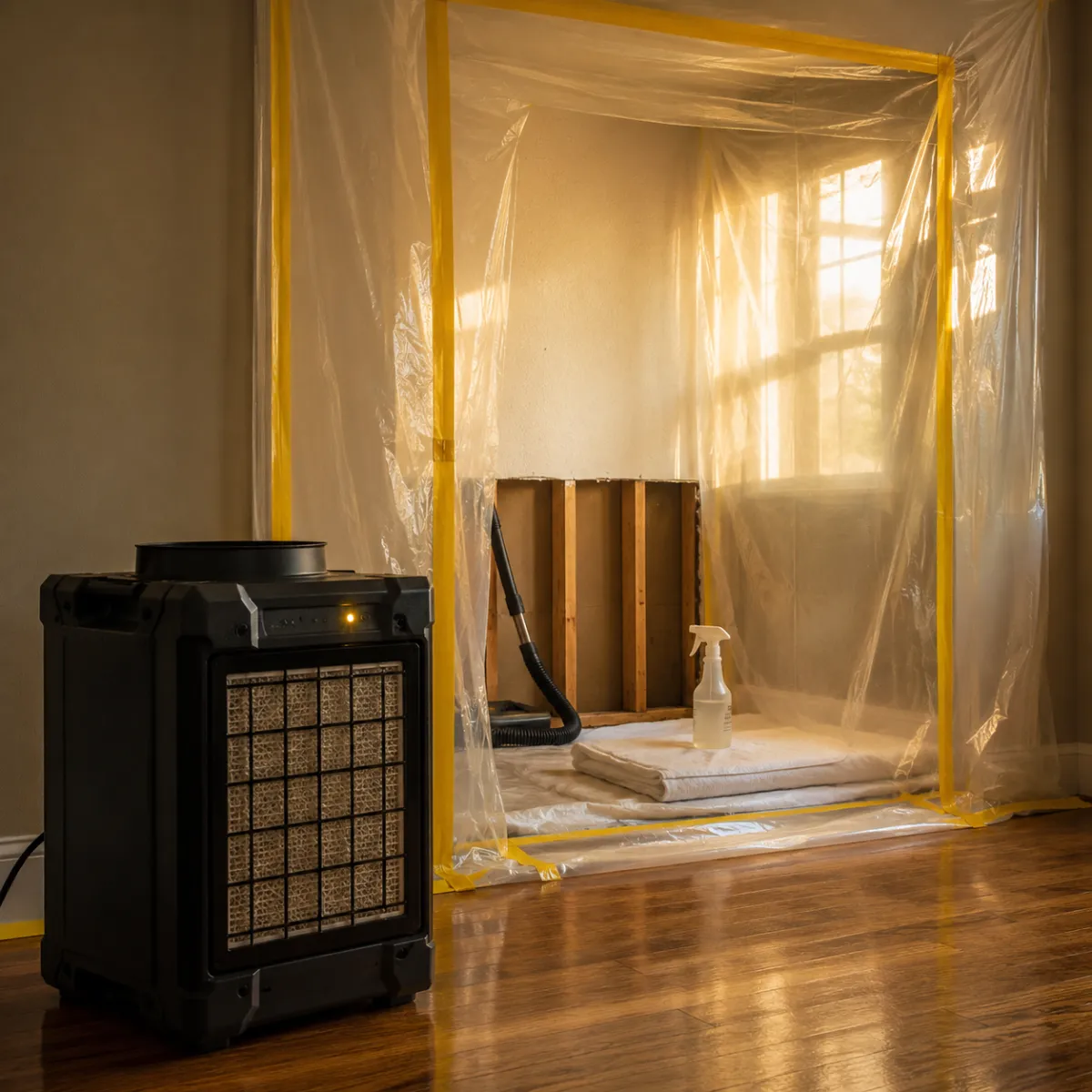
We seal the affected area with containment barriers and negative air pressure, so spores do not spread to clean parts of your Long Beach property during removal.
HEPA Air Filtration
We run HEPA air scrubbers to capture airborne spores throughout the removal, keeping the air safe to work in.
S520 Elevated Protocol Removal
We remove the black mold following the IICRC S520 elevated protocol, the standard developed specifically for handling this type of mold safely.
Antimicrobial Treatment and Moisture Correction
We treat cleaned surfaces against regrowth and correct the moisture source so the black mold cannot return.
Our Process
Our Long Beach Black Mold Removal Process

Inspection and Moisture Source Detection
We identify the black mold, map how far it has spread, and find the water source feeding it with moisture meters and cameras.

Containment and Air Control
We seal the area with barriers and negative air pressure and run HEPA air scrubbers before any removal begins.

S520 Protocol Removal
We remove the black mold and affected materials following the IICRC S520 elevated protocol, keeping spores contained throughout.

Treatment and Moisture Correction
We apply antimicrobial treatment and correct the moisture source, so the black mold does not grow back.
F.A.Q
Black Mold Removal FAQ
Here are answers to common questions about our restoration services.
Is black mold dangerous?
Black mold can pose health risks and should be removed with proper containment rather than disturbed. Our Long Beach crews follow the IICRC S520 elevated protocol, sealing the area and using HEPA filtration so spores do not spread through your property during removal.
Can I remove black mold myself with bleach?
Bleach does not reliably remove black mold and can release spores into the air when the mold is disturbed. Our Long Beach crews contain the area first, then remove the mold under IICRC S520 protocols and correct the moisture source so it does not return.
How do I know if the mold in my Long Beach home is black mold?
Black mold often appears as dark green or black patches with a slimy or fuzzy texture, usually near water damage or in damp areas. Because it can hide behind walls, our Long Beach crews use moisture meters and cameras to confirm and locate it.
What is the IICRC S520 elevated protocol?
The IICRC S520 elevated protocol is the industry standard for safely handling higher risk mold like black mold. It calls for full containment, negative air pressure, HEPA filtration, and protective equipment, all of which our Long Beach crews use during black mold removal.
Will black mold come back after removal?
Black mold returns if the moisture that caused it is not fixed, which is why removal alone is not enough. Our Long Beach crews remove the mold and correct the moisture source, then treat the area to stop regrowth.
Does insurance cover black mold removal in Long Beach?
Black mold removal is often covered when the mold results from a sudden covered water loss like a burst pipe, and we bill every major carrier directly. Mold from long term leaks or neglect is usually not covered. We document the cause for your claim.
Contact Us Now
Office Location
15725 Texaco Avenue, Paramount California 90723
Office Info
+1 562-313-6900
Family owned emergency restoration headquartered in Paramount, California. Our IICRC certified crews respond 24/7 across Long Beach and the surrounding South LA, South Bay, and North Orange County communities for water, fire, mold, and biohazard emergencies. Built on integrity, honor, and commitment since 2020


© 2026 What's Next Emergency Response - All Rights Reserved.